Learn how to secure and stage your bedroom using choke points, visibility, and layout — no renovations required.
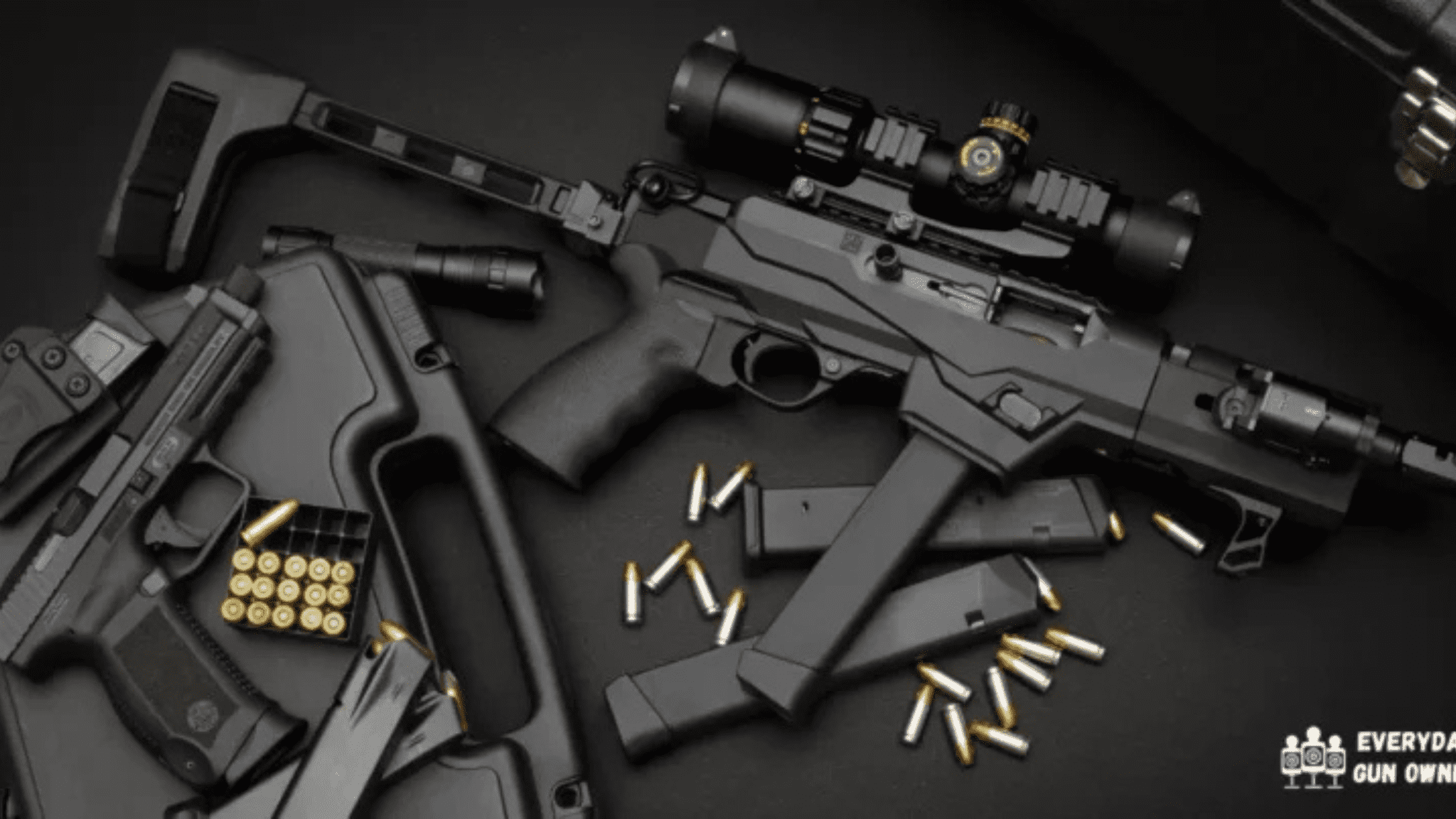
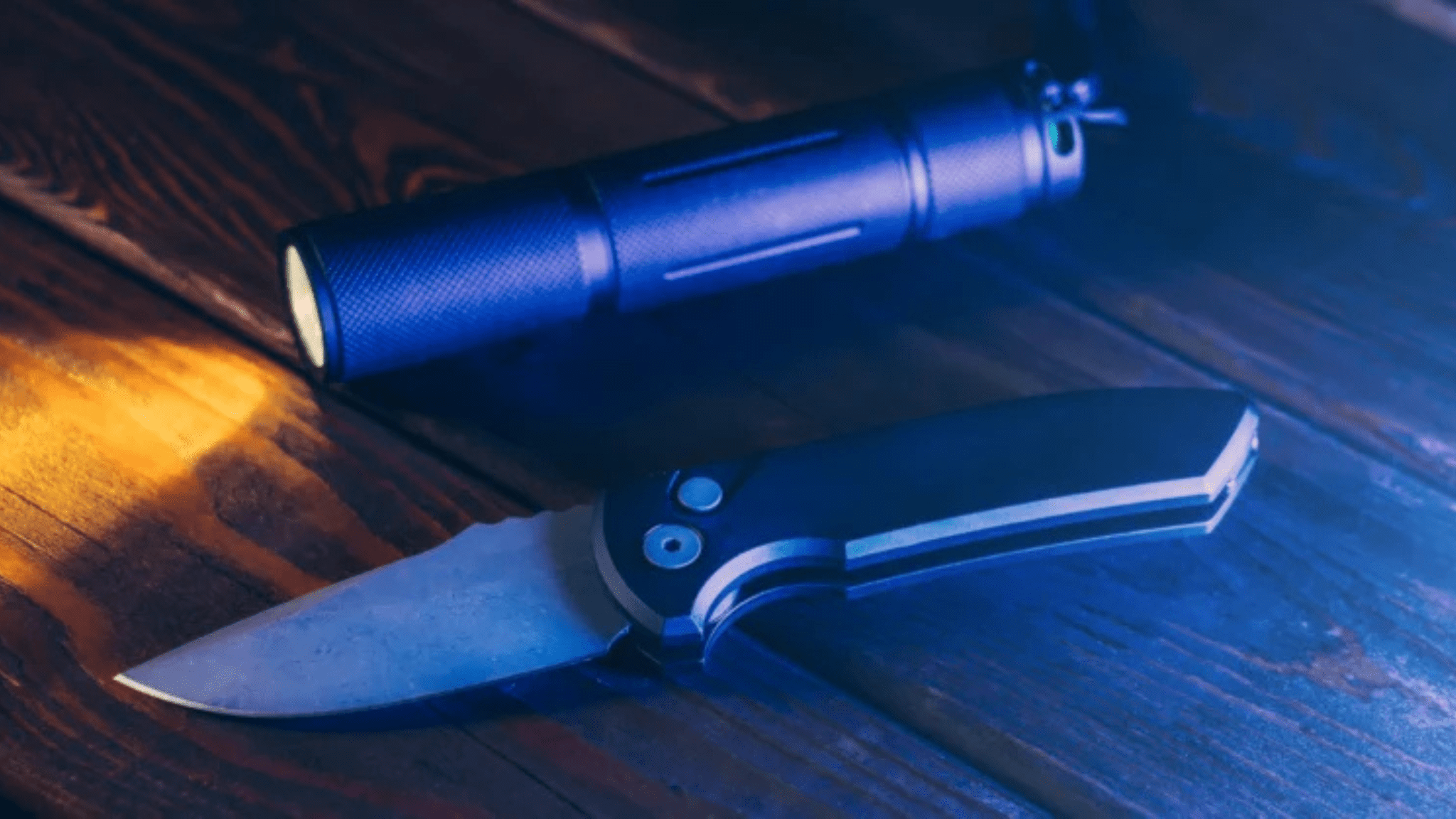
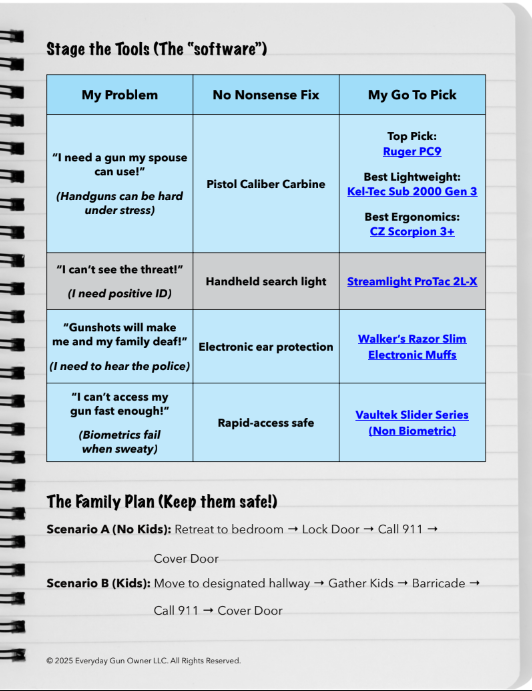
Which tools actually help you defend your home, and how to use them without wasting money on “tactical extras.”
Understand how to make the intruder move into your view, not the other way around — increasing your safety and advantage.
How to position loved ones, communicate, and stay prepared under stress — without trying to “hunt down” the threat.
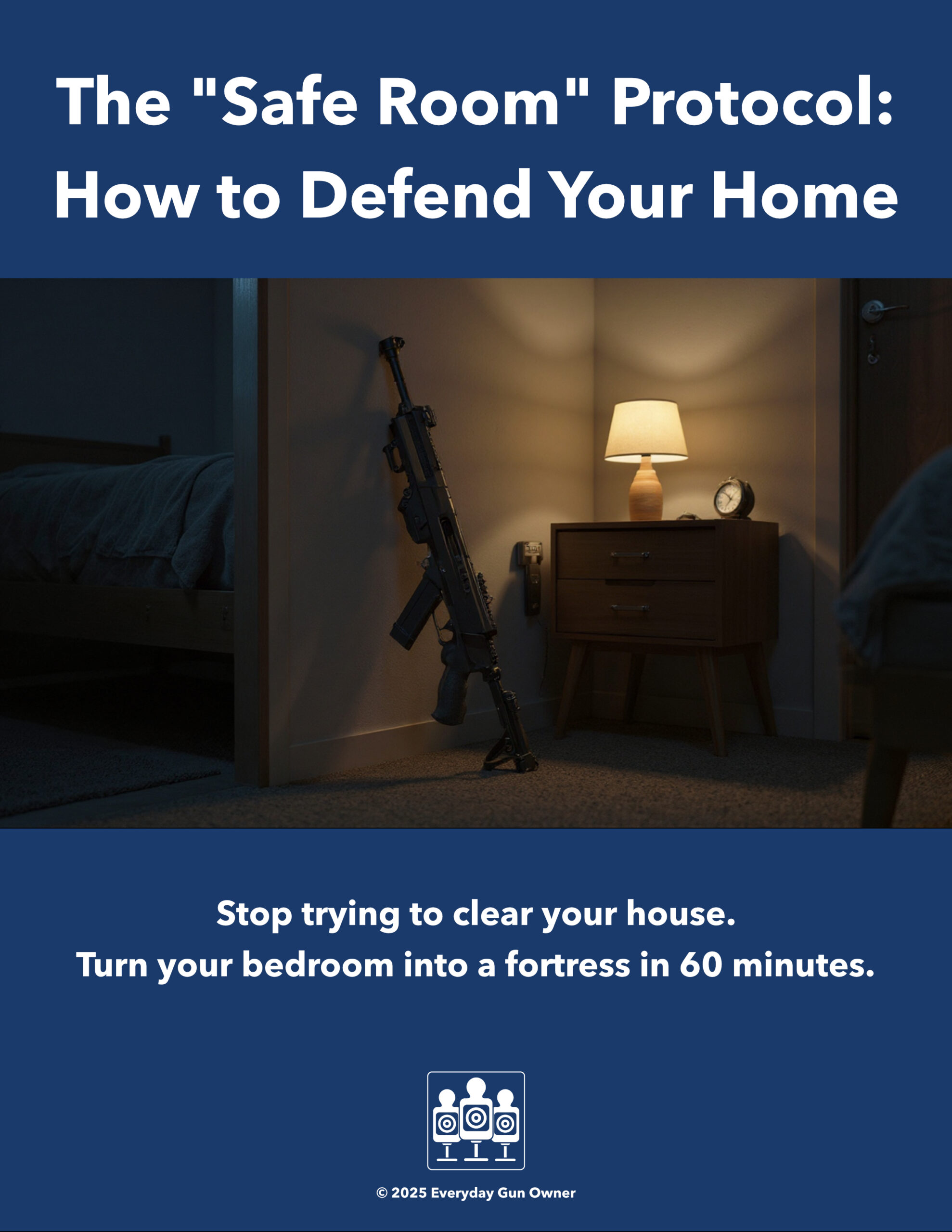
No need to search the house — let the threat come to you where you control the angle and the light.
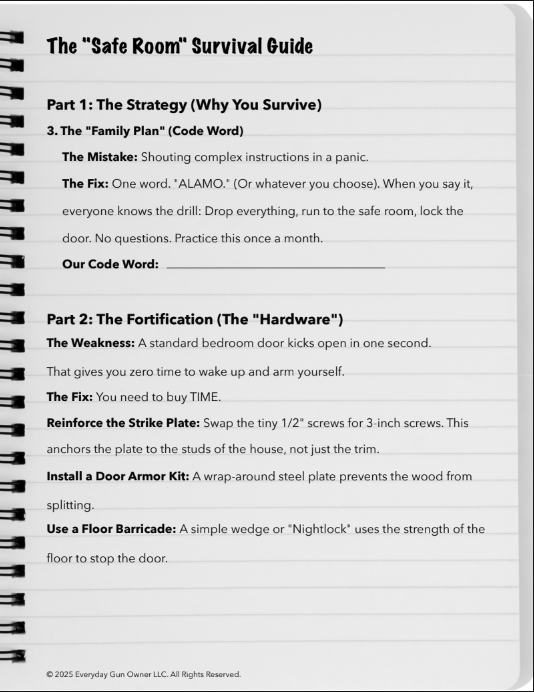
You don’t need special training to protect your family — you just need a smart, defendable plan.
Skip gimmicks and overpriced tools; focus on what keeps you safe in real-world conditions.
A secure safe room gives your family a protected space and buys time for police to arrive.
Dave Pitcher is the founder of Everyday Gun Owner and brings more than 30 years of firearms experience to his work as an educator and advocate for responsible gun ownership. A former Chief Warrant Officer in the U.S. Army Reserve, he served for 12 years and completed two overseas deployments in Afghanistan and Qatar. Drawing on both real-world experience and decades of hands-on expertise, Dave focuses on helping everyday Americans build practical, safe, and confident firearm skills.
Quick, actionable guidance to help real people protect their homes without chasing threats, overspending on gear, or using risky tactics.
No. Clearing rooms is dangerous, even for trained professionals. It forces you to move through blind corners while the intruder waits. A safe room strategy keeps you protected, controls the angle, and forces the threat to enter your field of view.
Yes. You don’t need military or law enforcement skills to protect your family. The key is using your environment wisely — blocking openings, controlling light, and letting the intruder come to a predictable point instead of chasing them through the house.
You only need a few essentials: a reliable defensive tool, a light source, and a way to contact help. The guide shows how to stage these items safely, access them quickly, and store them responsibly around family members.
Wake your family, move them to the safest position in the room, and set up behind cover if possible. The Safe Room Protocol walks you through quiet coordination, safe placement, and communication so panic doesn’t take over.
No. Most “tactical” gear adds cost but doesn’t improve safety. A few smart, affordable choices make a bigger difference than a pile of accessories. The guide shows what’s truly useful — and what’s just marketing.
No spam. You can unsubscribe anytime.