
Most gun recommendations for women are written by men who have never held a gun with arthritic fingers at 2am. They hand you a list, throw in a photo of a pink grip, and call it a day.
That’s not what this is.
I’m Dave Pitcher. I’m a husband, a brother, and a son. I spent 30 years in the firearms world and 12 years in the Army Reserve. I’m also a USCCA-certified instructor who has worked with women shooters long enough to know that the advice flooding the internet ignores the one thing that actually matters: whether you can run the gun when your body is working against you.
If you’re over 50 and you’re thinking seriously about home defense, this article is for you. Not the 28-year-old version of you. The version of you right now, with the hands you have today, in the house you actually live in.

The Question Nobody Asks
Every “best guns for women” article starts with caliber. Nine millimeter versus .380. Stopping power. Ballistic performance. That’s the wrong starting point.
The right starting point is this: can you actually run the gun?
Can you rack the slide when your hands are stiff first thing in the morning? Can you get a firm enough grip when your fingers don’t cooperate the way they used to? Can you put the front sight on a target in a dark hallway when your heart rate is through the roof?
Those are the questions that determine whether the gun in your nightstand is a defensive tool or an expensive piece of hardware that isn’t going to help you when you need it most.
Here’s what I know from working with women in their 50s, 60s, and beyond: grip strength declines with age for everyone. Research published in the Journal of Hand Surgery found that women’s grip strength peaks in their 30s and declines steadily from there. Add joint pain, arthritis, or old injuries, and a slide that feels fine in the gun store can feel impossible after a stressful 20 minutes at the range. That matters. Because a home defense scenario is the most stressful 20 seconds of your life, not a calm afternoon at the counter.
That’s the lens this article is written through. Not which gun looks good. Not which caliber the internet says you should carry. Which gun you can actually operate — consistently, reliably, under pressure — with the hands and eyes and body you have right now.
What “Easy to Operate” Actually Means

Before we get into specific guns, let’s define the terms. You’ll see these phrases thrown around in gun reviews without explanation. Here’s what they mean in plain language.
Slide. The top part of a semi-automatic pistol that moves back when you fire and needs to be pulled back manually to chamber the first round. This is where most women over 50 run into problems. Standard slides require meaningful grip strength. If your hands hurt or your grip has declined, a standard slide can be genuinely difficult to operate reliably.
Rack the slide. The act of pulling the slide back to load the first round. This is the step that trips up a lot of shooters with grip issues. Some guns are significantly easier to rack than others — that’s not a marketing claim, it’s a measurable mechanical difference.
Recoil. The kick you feel when the gun fires. Every gun has it. Bigger calibers have more. But the weight of the gun, the grip design, and the bore axis (how high the barrel sits relative to your hand) all affect how much recoil you actually feel. A heavier gun in a lower caliber often feels softer than a light gun in a higher caliber.
Revolver vs. semi-automatic. A revolver has a rotating cylinder that holds the rounds — no slide to rack, no magazine to seat. You open the cylinder, load it, close it, and it’s ready. A semi-automatic uses a detachable magazine and requires you to rack the slide to chamber the first round. Both are legitimate home defense options with different trade-offs.
Manual safety. A physical lever or button that prevents the gun from firing until you disengage it. Some people want this for staged home defense guns. Others find it adds a step under stress. There’s no universal right answer — it depends on your training and your setup.
What About Caliber? Finding the Right Balance
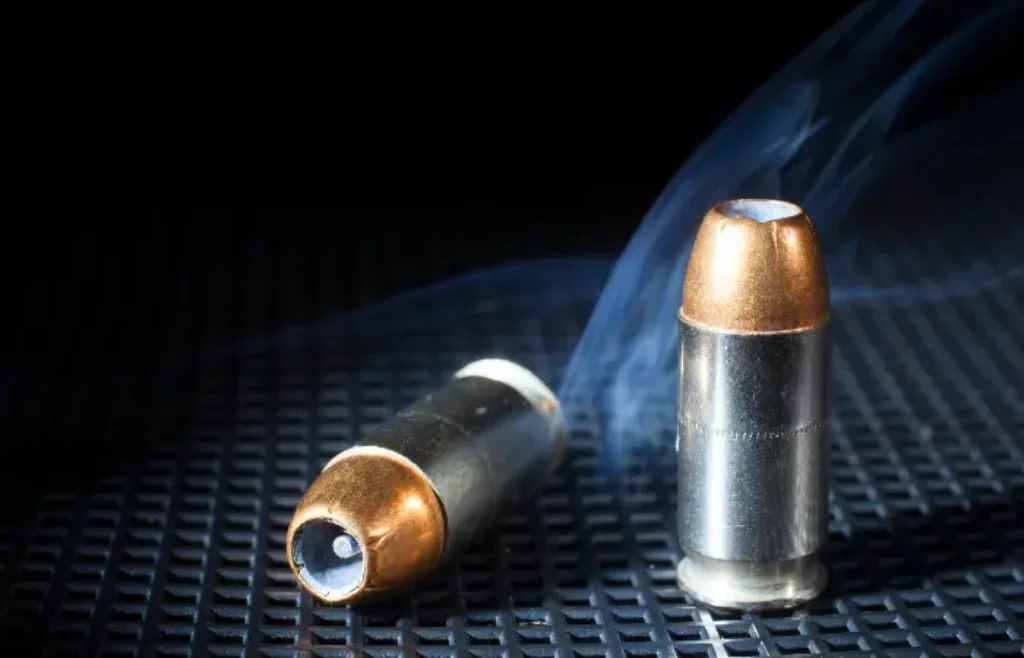
Ah, the age-old question: what’s the “best” caliber? The truth is, there’s no magic bullet (pun intended!). It really boils down to finding the right balance between stopping power and your ability to handle the firearm. Let’s break down some common home defense calibers:
- 9mm: This is probably the most popular handgun caliber in the US right now, and for good reason. It offers a good balance of stopping power and manageable recoil. Modern 9mm ammunition is very effective, and handguns chambered in 9mm often have higher magazine capacities. It’s a solid all-around choice for many.
- .38 Special: A classic revolver caliber. While maybe not as powerful as some others on paper, it’s generally easy to handle, especially in a heavier revolver. It’s a good option for those who prefer the simplicity of a revolver and are comfortable with its capabilities.
- .40 S&W: Designed to offer more stopping power than the 9mm, but it comes with a bit more recoil. It’s a capable round, but the increased recoil might make it harder for some to control effectively.
- .45 ACP: A larger caliber with significant stopping power. However, it typically has the most recoil of these common options, and handguns chambered in .45 ACP often have lower magazine capacities and larger grips, which might not be ideal for everyone.
| Caliber | Pros | Cons |
| 9mm | Good balance of stopping power and manageable recoil; High capacity potential; Modern ammunition very effective; Widely available and often less expensive. | May require precise shot placement compared to larger calibers for immediate incapacitation. |
| .38 Special | Generally easy to handle, especially in heavier revolvers; Good option for those preferring simplicity of a revolver. | Typically lower capacity (5-6 rounds in most revolvers); Less stopping power than some other options. |
| .40 S&W | More stopping power than 9mm. | More recoil than 9mm, potentially harder to control for some; Can have lower capacity than 9mm in some handguns. |
| .45 ACP | Significant stopping power. | Highest recoil of these options; Typically lower magazine capacity; Larger grip size can be difficult for some to handle. |
Ultimately, the “best” caliber for you is the one you can shoot accurately and consistently. It’s always a good idea to try different calibers at a shooting range, if possible, under the guidance of a qualified instructor, to see what feels right in your hands.
To understand the mechanics behind these firearms, check out Handgun Parts Breakdown for a clear guide on how handguns work and what makes them effective for home defense.
Beyond the Firearm: Essential Accessories and Training
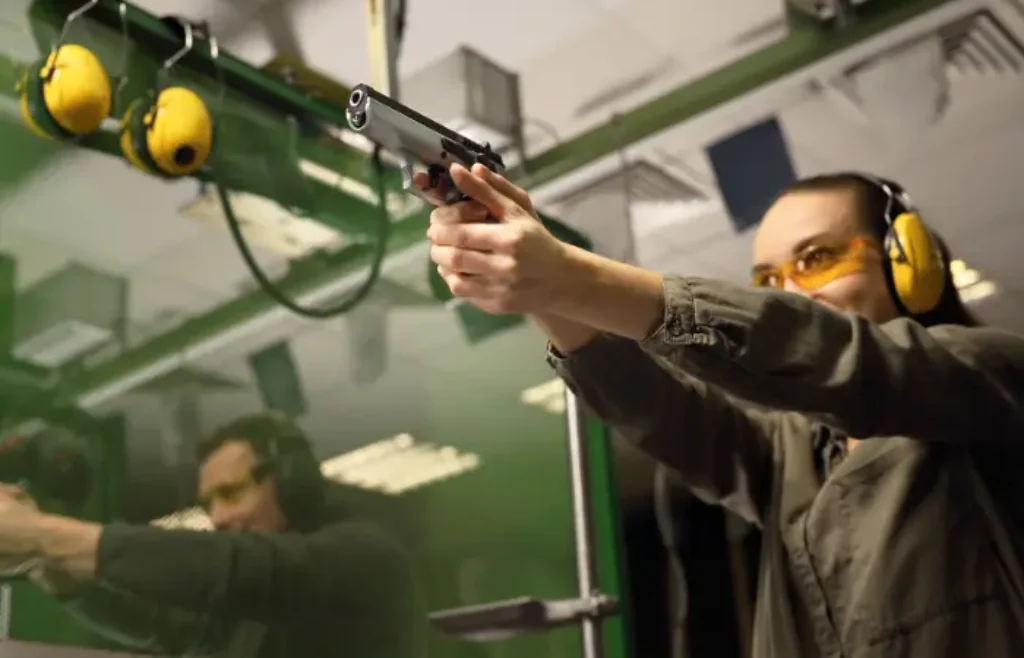
Owning a home defense firearm is just one piece of the puzzle. To be truly prepared, you’ll also need to consider essential accessories and, most importantly, professional training.
First, safe storage is paramount. A quality gun safe or lock box is crucial to prevent unauthorized access, especially if you have children or others in your home who shouldn’t have access to the firearm. However, you also need to consider how you will access it quickly in an emergency. Think about secure but readily accessible locations.
Next, a weapon light is an invaluable accessory for home defense. In a nighttime scenario, you need to be able to identify a potential threat before you consider using deadly force. A light mounted on your firearm allows you to keep both hands on the gun while illuminating your target.
Finally, and I can’t stress this enough, professional firearms training is absolutely essential. This isn’t just about learning how to shoot accurately (though that’s important too). A good training course will cover safe gun handling, storage, the fundamentals of marksmanship, and, crucially, the legal aspects of self-defense in your area. Understanding when you are legally justified in using deadly force is just as important as knowing how to operate your firearm. Seek out reputable instructors who can provide comprehensive training tailored to home defense scenarios.
The Five Guns Worth Considering
Choosing the best home defense gun for you is a deeply personal decision. What works well for one person might not be the best fit for another. The most important thing is to select a firearm that you can handle safely, comfortably, and effectively.
Smith & Wesson M&P Shield EZ (9mm)
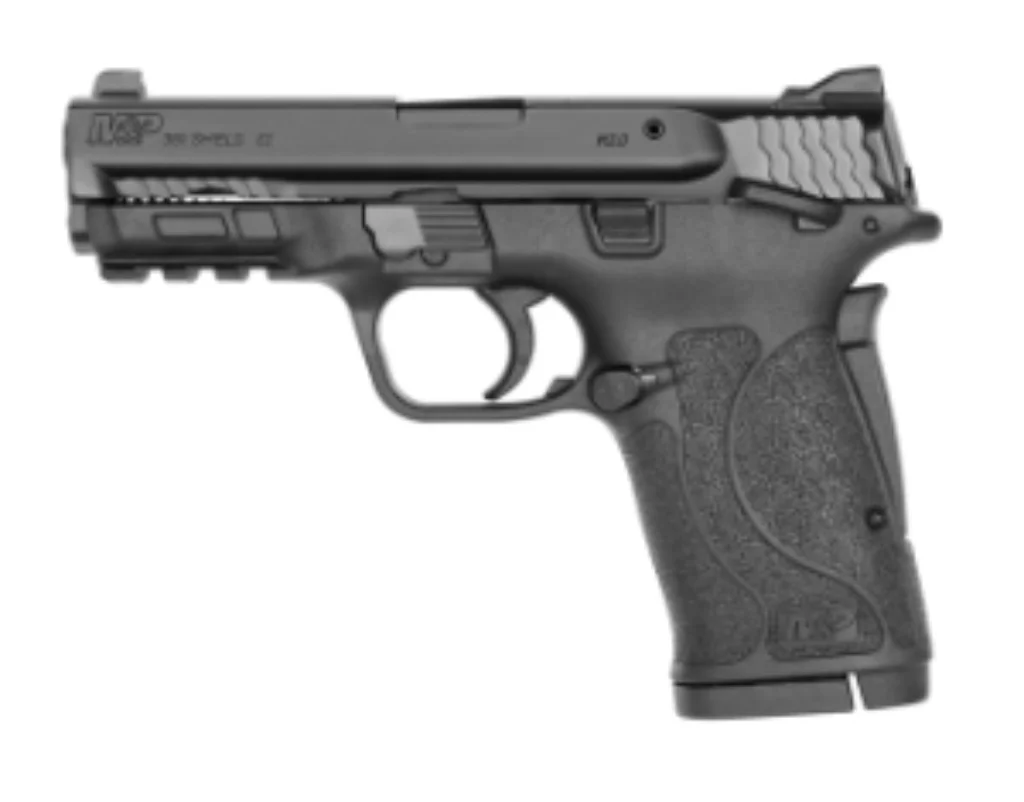
If your hands are the main concern, start here. This is the gun I point women over 50 to more than any other, and the reason is mechanical, not cosmetic. The EZ was specifically engineered with an easier-to-rack slide. The spring tension is lighter than a standard pistol, which means you need less grip strength to chamber a round. That’s not a compromise — that’s smart engineering for a real problem.
The grip is slightly larger than some slim-frame pistols, which actually helps shooters with smaller or weaker hands get a more secure hold. The texture is aggressive enough to stay put without being painful. The trigger pull is clean and predictable.
It also has a grip safety — a small panel on the backstrap that has to be depressed for the gun to fire. For a gun you’re staging on a nightstand or in a quick-access safe, that adds a layer of passive security without requiring you to remember to disengage a lever under stress.
The 9mm chambering gives you a round that exceeds FBI penetration standards for reliable stopping power — both of the major 9mm hollow point loads designed for self-defense will perform well from this barrel length.
The honest con: eight-round capacity. For home defense from a fixed position — which is where you should be, not clearing the house — eight rounds is sufficient. But it’s worth knowing.
For a woman who hasn’t shot much and whose hands are her primary limitation, the Shield EZ is the right starting point. It’s forgiving. It’s reliable. And it was built for this exact problem.
Pros:
- Easy to Rack: Slide’s a cinch to pull, huge if grip strength’s an issue—like for arthritis or beginners.
- Lightweight: At 23 ounces, it’s no burden to grab or practice with, fitting busy schedules.
- Grip Safety: Won’t fire unless you’re holding it right, adding safety for homes with kids.
Cons:
- Lower Capacity: 8 rounds might feel light compared to bigger guns—accuracy matters here.
- Trigger Learning Curve: Crisp but might need range time to master if you’re new.
Why It Works: It’s all about comfort and ease—ideal if you want a gun that feels friendly but still gets the job done.
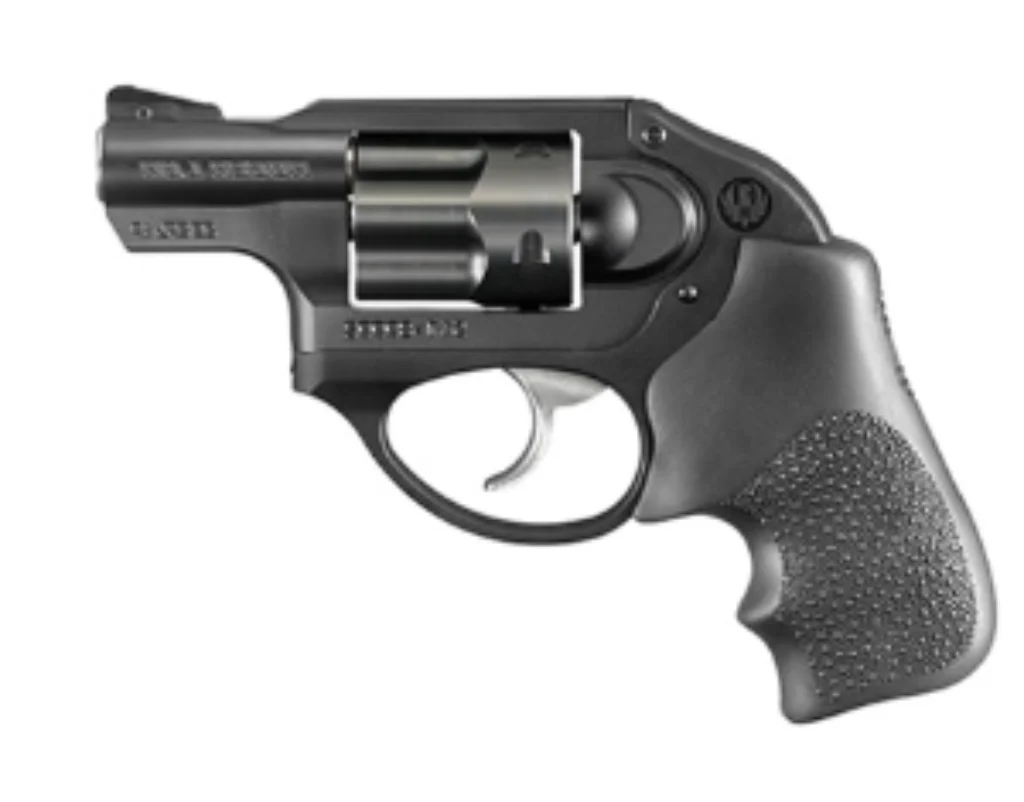
Ruger LCR (.38 Special)
The LCR solves a different problem. If the idea of racking a slide — even an easy one — creates anxiety, a revolver removes the question entirely. There is no slide. You open the cylinder, drop in five rounds, close it, and it’s ready. Under stress, with stiff hands, at 3am, that simplicity matters.
The Ruger LCR is one of the lightest revolvers on the market. The polymer frame keeps the weight down and the recoil manageable for a .38 Special. The grip is designed to absorb some of that felt recoil rather than transfer it directly to your hand. For someone with wrist or hand pain, that’s a meaningful difference.
Here’s the honest caveat: the double-action trigger pull. Revolvers like the LCR require you to pull the trigger through the entire cocking and firing cycle — the pull is longer and heavier than most semi-automatics. On a fresh hand, it’s manageable. On an arthritic hand after a stressful few seconds, it can be a real challenge. If you’re considering a revolver, time at the range with a qualified instructor isn’t optional. You need to know whether your hands can run that trigger consistently.
Five rounds is the other number to sit with. For home defense from a safe room — door locked, 911 on the line, firearm pointed at the only entry point — five rounds is likely enough. For any other scenario, it’s a real limitation.
The LCR earns its place on this list for shooters who value simplicity above all else and whose hands can manage the trigger. It’s a proven design from a reliable manufacturer. Just be honest with yourself about whether the trigger works for your hands before you commit to it as your primary home defense firearm.
Pros:
- Super Simple: No racking or safeties—just pull the trigger, perfect when adrenaline’s pumping.
- Lightweight: 13.5 ounces makes it easy to stash or hold without strain.
- Manageable Recoil: .38 Special with a polymer frame keeps the kick in check—nice for comfort.
Cons:
- Limited Capacity: 5 shots mean you’ve got to be spot-on—reloads take time.
- Trigger Pull: Double-action means a heavier pull, definitely try it out before you buy.
Why It Works: It’s for the woman who wants straightforward defense—load it, keep it handy, and trust it’ll work.
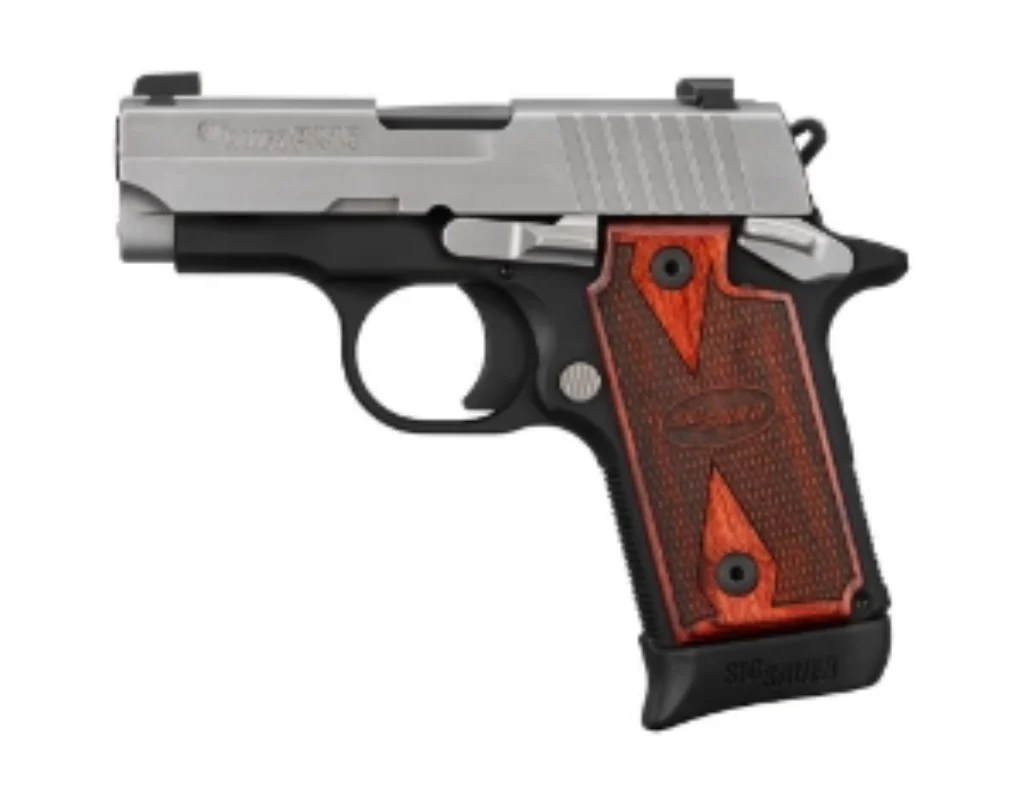
SIG Sauer P238
The P238 is the gun for the woman who wants the simplest possible operation in the smallest possible package. The .380 ACP chambering means noticeably less recoil than a 9mm — and in a gun this size, that matters. The slide is lighter and easier to rack than a full 9mm pistol. At just over 15 ounces unloaded, you barely know you’re holding it.
What makes the P238 stand out for this audience is the combination of low recoil and high shootability. It’s accurate. It points naturally. For a woman who doesn’t shoot frequently and wants a gun that feels manageable every time she picks it up, the .380 in the P238 is genuinely easier to shoot well than a 9mm in a gun of similar size.
The honest conversation about .380 for home defense: yes, it is less powerful than 9mm on paper. The question is whether the difference matters in a real scenario. According to FBI ballistic gelatin testing, modern .380 ACP hollow point loads like the Hornady Critical Defense clear the minimum penetration standard of 12 inches. That’s the threshold established for reliable incapacitation. .380 clears it. Will it always perform identically to a 9mm? No. Will it stop a threat at home defense distances when properly placed? Yes.
The P238 does have a manual thumb safety. You need to swipe it down before the gun will fire. For a staged home defense gun, that’s a reasonable trade-off. For a gun you grab in a panic in the dark, you need to train until disengaging that safety is automatic. That’s not optional — it’s the price of admission for this platform.
The price point is the other honest con. The P238 runs $600 to $700. That’s a real number. If budget is a factor, there are options on this list that do similar work for less money.
If budget isn’t the primary concern and you want a gun that handles gently and fits smaller hands naturally, the P238 is a serious choice.
Pros:
- Lightweight: At 15.2 ounces, it’s a breeze to handle or stash by your bed.
- Low Recoil: .380 ACP is gentle, making it easy to shoot accurately, even for beginners.
- Manual Safety: Gives you control, a big plus if you’re worried about accidents around the house.
Cons:
- Lower Capacity: 6+1 rounds mean you’ve got less firepower—precision’s key.
- Price Tag: $600-$700 isn’t cheap, though it’s a solid investment for quality.
Why It Works: It’s perfect for a woman who wants something small but mighty—great for tight spaces or if you’re on the move. The safety and smooth trigger make it feel safe and intuitive.
Taurus G3c
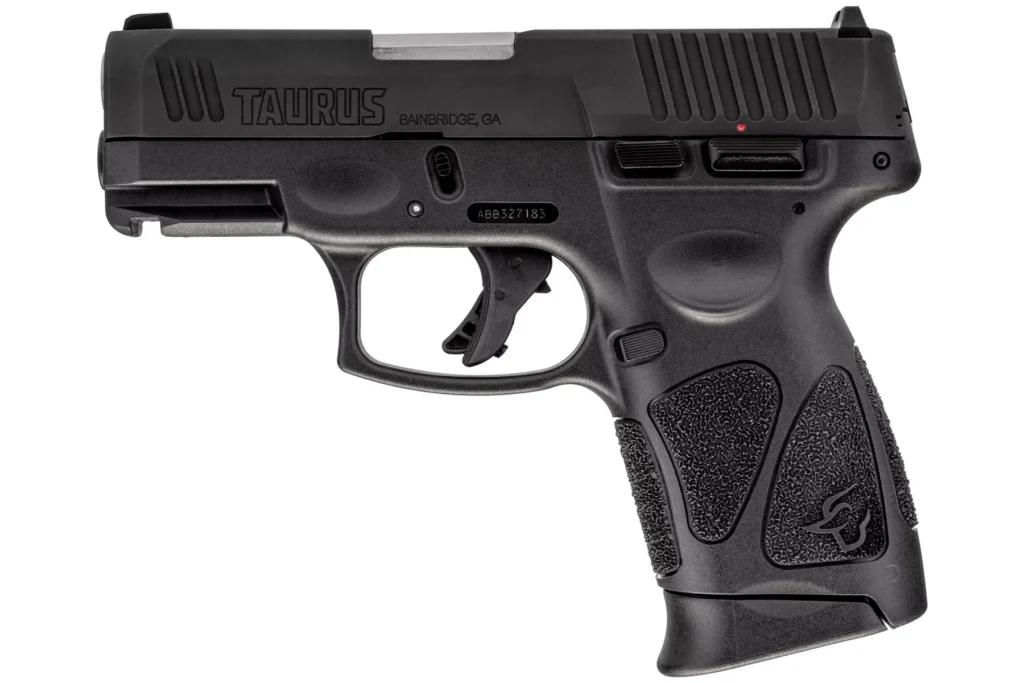
Here’s the thing about the Taurus G3c: it will do everything you need a home defense gun to do, and it will do it for around $300. For a woman who is new to firearms, who isn’t sure how much she’ll invest in training and accessories, or who is on a fixed income, that price matters. It doesn’t make the gun less effective. It makes the decision more accessible.
The G3c is a compact 9mm that holds 12 rounds in the magazine. The grip texture is aggressive — it stays in your hand even with a less-than-perfect grip. The bore axis sits relatively low, which helps reduce felt recoil. For a 9mm, it’s a manageable shooter.
The manual safety is a genuine feature for this audience. When you stage a gun for home defense — in a quick-access safe, on a nightstand, in a drawer — a manual safety provides passive security. It won’t fire accidentally. You disengage it as part of your draw, and with training that becomes one fluid motion.
The honest caveat with Taurus is their historical reputation for quality control inconsistency. This is the pushback you’ll see in the comments, and it’s fair to acknowledge. The G3c specifically has a better track record than some older Taurus models, and the company has meaningfully improved its manufacturing in recent years. But here’s the honest advice: if you buy a G3c, run 200 rounds through it before you trust it for home defense. Any reliability issues tend to surface early. If it runs clean through 200 rounds of your chosen defensive ammunition, it will likely run clean when you need it.
For a woman who wants a capable, affordable, 9mm home defense option with a safety — and who is willing to do that break-in testing — the G3c belongs on the list.
Pros:
- Low Recoil: 9mm keeps it tame, so you can shoot accurately even with smaller hands or less experience.
- High Capacity: 15 rounds mean you’re covered for multiple threats—peace of mind in a pinch.
- Reliability: It’s a Glock—simple, no external safety, just point and shoot when it counts.
Cons:
- Grip Size: Might feel a bit thick for tiny hands, though you can tweak it with aftermarket grips.
- No Manual Safety: If you’re jittery about accidental shots, you’ll need solid training to feel safe.
Why It Works: It’s a jack-of-all-trades—easy to use, store, and trust. Great for a woman wanting power without intimidation.
Runner-up: Glock 43 9mm
The Glock 43 is here for a specific type of shooter: someone whose hands are still functional, who wants the proven reliability of a Glock platform, but who finds the full-size Glock 19 too wide to grip comfortably. The 43 is a single-stack 9mm — that means the magazine holds rounds in a single column, which makes the grip noticeably slimmer. For smaller hands, that slim profile makes a real difference in how secure and natural the grip feels.
The trade-off is capacity. The Glock 43 holds six rounds in the standard magazine. Extended magazines bring it to eight. For home defense, that’s workable. For a carry gun that does double duty, it’s worth factoring in.
The slide is standard Glock — it requires real grip strength to rack reliably. This is not the right recommendation for someone whose hands are the primary limitation. The Shield EZ exists for that problem. The Glock 43 is for the woman who has been shooting for years, whose hands still cooperate, and who wants a slim, reliable 9mm she can trust in any situation.
Glock’s reliability record is documented and well-earned. If you want the most proven platform on this list, the 43 delivers that. The slim frame makes it more hand-friendly than most Glocks without sacrificing the core reason people carry Glocks in the first place.
Pros:
- Slim Grip: Single-stack frame means a narrower grip circumference than most 9mm pistols. If a full-size gun has always felt like too much in your hand, the 43 fits differently.
- Proven Reliability: Glocks run. That’s not brand loyalty talking — it’s a documented track record across millions of rounds in demanding conditions. For a home defense gun that may sit in a safe for years between range trips, reliability when you finally need it matters.
- Full-Power 9mm: You get standard 9mm performance in a compact package. No caliber compromise, no reduced-power loads required.
Cons:
- Slide Requires Real Grip Strength: This is not an easy-rack pistol. If your hands are stiff in the morning or arthritis is a factor, the standard Glock recoil spring will fight you. Train with it regularly or choose the Shield EZ instead.
- Six-Round Capacity: The standard magazine holds six rounds. For home defense from a fixed position that’s workable — but it’s the lowest capacity on this list and worth knowing going in.
- No Manual Safety: The Glock fires when you pull the trigger. The internal safeties are solid, but there is no external lever to engage or disengage. That’s a non-issue with proper training and holstering habits. It’s worth thinking through before you commit.
Why It Works: If your hands are still strong and you want the most reliable platform on this list in a grip size that actually fits smaller hands, the 43 delivers. It’s not the right gun for every woman over 50 — but for the shooter whose primary limitation is grip circumference rather than grip strength, it’s a serious option.
That last line in “Why It Works” does the work of differentiating it from the Shield EZ without undercutting either gun. Want me to update the article file with this section dropped in?
I strongly encourage you to try out different types of firearms at a local shooting range, if possible. Many ranges offer rentals and have experienced staff who can provide guidance. Talk to reputable firearms instructors and get their insights. Don’t feel pressured to choose something just because someone else recommends it. Take your time, do your research, and prioritize what feels right and manageable for you.
Remember, owning a firearm for home defense is a significant responsibility. It requires ongoing training, a commitment to safe handling and storage practices, and a thorough understanding of the laws in your area. By taking the time to educate yourself and make a thoughtful decision, you’re taking a proactive step towards ensuring the safety and security of your home and loved ones. You’ve got this, and we’re here to help you every step of the way. For practical tips on keeping your firearm secure, read Gun Safety in the Home to learn how to store and handle your gun responsibly.